Austin Traffic Reality Check: Commute Times and Tips for Every Suburb
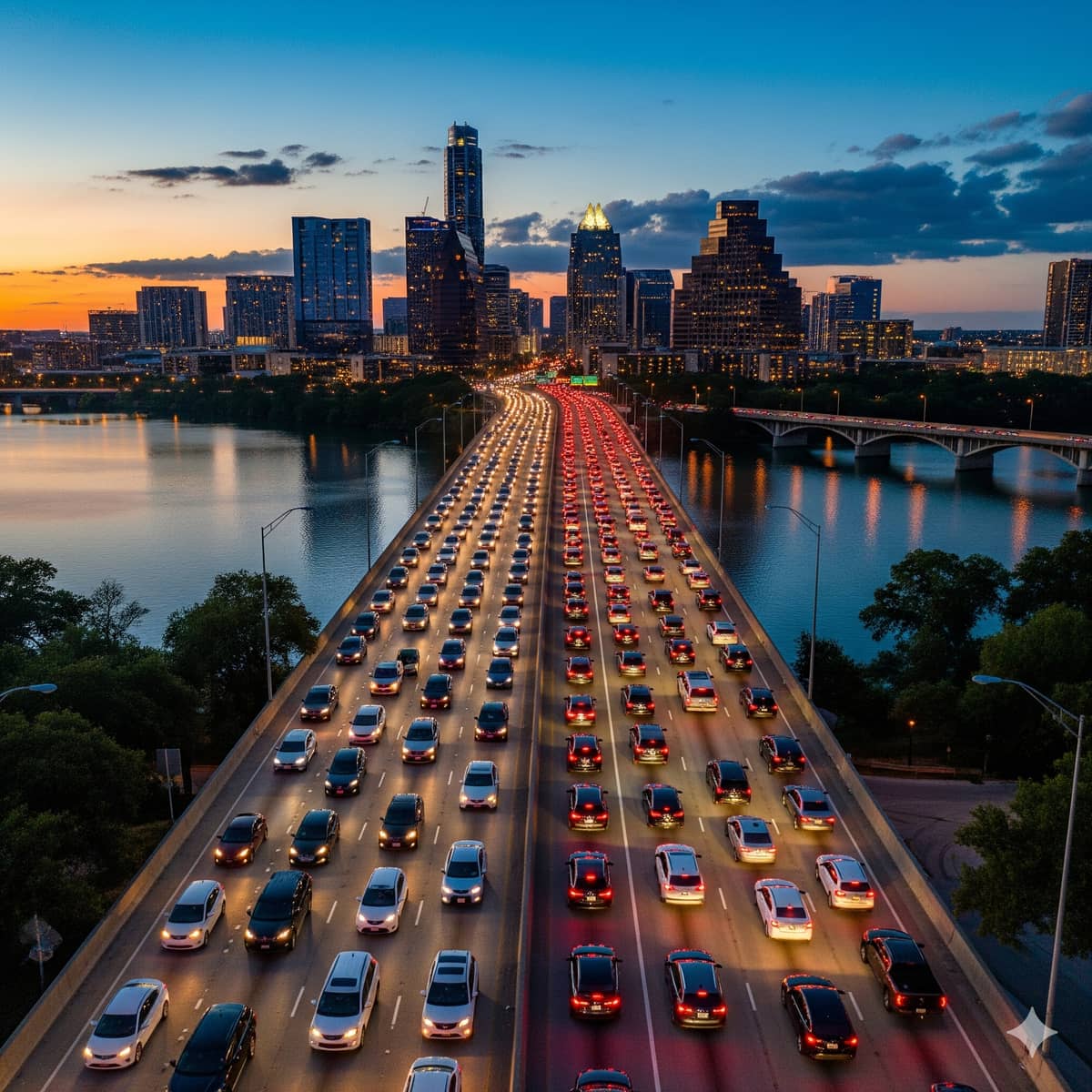
Traffic is one of the most overlooked parts of buying a home in Austin. The region's rapid growth has brought steady congestion across many major corridors. If you're considering a home in the Austin area, it's worth understanding commute times from nearby suburbs. Knowing which routes back up, which stay manageable, and how to plan your day can be the difference between loving your new home and losing hours in the car each week.
In this guide, we break down traffic patterns and realistic commute expectations from Austin's north, south, east, and west suburbs. You'll find straightforward insight on key roads, times to avoid, and practical strategies to reduce commute stress.
Understanding Austin's Traffic Patterns
Austin's congestion isn't the same in every direction. The main arteries—Interstate 35 (I-35), US-183, MoPac Expressway (Loop 1), and Highway 290—carry the heaviest load during rush hour. Here's what to expect:
North–South Corridors (I-35, MoPac): These routes connect suburbs like Kyle, Buda, Pflugerville, and Jarrell and see the most traffic, especially during morning and evening peaks (approximately 6:30–9:00 a.m. and 4:00–6:30 p.m.).
East–West Corridors (Highway 71, Highway 290, RM 2222, Highway 620): Typically lighter than north–south routes, though congestion can build near central Austin and major intersections. Commuters from Manor, Bastrop, and the Lake Travis area often find these routes more predictable.
North Austin Suburbs
The northern suburbs of Austin combine historic character, expanding communities, and strong schools. They also come with some of the city's toughest commute challenges due to heavy north–south traffic corridors. Here's a closer look at key northern suburbs:
Round Rock
- Commute to Downtown Austin: 25–40 minutes without traffic; 40–65 minutes in rush hour
- Best Routes: I-35 south is the main route; SH 45 Toll offers a faster alternative
- Rush Hour Reality: Significant backups occur near George Bush Drive and the Round Rock Outlet Mall. Toll roads like 45 are underused and save 10–15 minutes
Pflugerville
- Commute to Downtown Austin: 20–40 minutes without traffic; 35–60 minutes in rush hour
- Best Routes: Parmer Lane west to I-35 south; US-183 south to Highway 290 west
- Rush Hour Reality: Traffic builds significantly between 7:00–8:30 a.m. southbound. Evening rush often clears by 6:00 p.m.
Cedar Park
- Commute to Downtown Austin: 25–45 minutes without traffic; 40–70 minutes during peak hours
- Best Routes: RM 620 south to Highway 71; Highway 183 south via Leander
- Rush Hour Reality: RM 620 can slow dramatically near Lake Creek Parkway. Highway 183 is often faster but longer
Georgetown
- Commute to Downtown Austin: 35–50 minutes without traffic; 50–80 minutes during rush hour
- Best Routes: I-35 south; SH 45 Toll to MoPac south
- Rush Hour Reality: Distance works against Georgetown commuters. Toll roads are essential for reasonable commute times
South Austin Suburbs
South Austin suburbs offer a mix of established neighborhoods and rapid growth areas. Commutes are generally more manageable than northern suburbs, though I-35 south still presents challenges.
Kyle
- Commute to Downtown Austin: 35–50 minutes without traffic; 50–75 minutes during peak hours
- Best Routes: I-35 north is the main artery. FM 150 to SH 45 Toll is an option for central Austin destinations
- Rush Hour Reality: Morning traffic backs up significantly at the Kyle Parkway interchange. Evening commute tends to improve after 5:30 p.m.
Buda
- Commute to Downtown Austin: 25–35 minutes without traffic; 35–60 minutes during peak times
- Best Routes: I-35 north; local roads like FM 967 can be alternate options to reach South Austin destinations
- Rush Hour Reality: Morning backups occur near exit 221, evening traffic improves after 5:15 p.m.
San Marcos
- Commute to Downtown Austin: 45–60 minutes without traffic; 60–90 minutes during rush hour
- Best Routes: I-35 north exclusively for most commuters
- Rush Hour Reality: Distance makes this challenging for daily commuters. Consider this for occasional downtown trips rather than daily commutes
East Austin Suburbs
East Austin suburbs often provide the most predictable commutes due to lighter east–west traffic patterns and multiple route options.
Manor
- Commute to Downtown Austin: 20–30 minutes without traffic; 25–45 minutes in peak hours
- Best Routes: US-290 west is straightforward. Alternative routes include FM 973 or FM 812 to avoid minor bottlenecks near Tech Ridge
- Rush Hour Reality: Traffic is light relative to north-south corridors. Morning backups occur closer to Parmer Lane, but beyond that, speeds remain steady
Elgin
- Commute to Downtown Austin: 30–40 minutes without traffic; 35–55 minutes during peak hours
- Best Routes: Highway 290 west directly to downtown
- Rush Hour Reality: Consistently the most reliable commute times in the Austin area. Traffic rarely approaches stop-and-go conditions
Bastrop
- Commute to Downtown Austin: 35–45 minutes without traffic; 40–65 minutes during rush hour
- Best Routes: Highway 71 west to Austin
- Rush Hour Reality: Distance is the main factor. Traffic is generally steady, but the drive is long enough that any delays become significant
West Austin Suburbs
Austin's west suburbs offer hill country views, resort-style living, and access to outdoor amenities—but commutes vary depending on exact location.
Bee Cave
- Commute to Downtown Austin: 20–30 minutes without traffic; 30–50 minutes during peak hours
- Best Routes: Highway 71 east or RM 620 south. Highway 71 often handles heavier traffic near the Barton Creek Greenbelt and MoPac interchange
- Rush Hour Reality: Morning congestion is lighter than I-35 corridors but can slow down between Bee Cave Parkway and Highway 360. Evening traffic is typically manageable if leaving after 5:15 p.m.
Lake Travis
- Commute to Downtown Austin: 25–40 minutes without traffic; 40–65 minutes during peak hours
- Best Routes: RM 620 south to Highway 71 east; Highway 360 south to MoPac south
- Rush Hour Reality: Winding roads and elevation changes affect speeds regardless of traffic volume. Allow extra time for weather-related delays
Key Insight: West-side commutes are often less congested than north-south, but drivers must account for elevation changes, winding roads, and slower speeds in certain areas.
Honest Reality: How Bad Is Austin Traffic Really?
I-35 North-South: Long backups, frequent stop-and-go conditions, especially between Round Rock and downtown. Expect 40–60 minute delays in rush hour for a 25-mile commute.
MoPac Expressway: Generally smooth south of Parmer Lane, but congestion spikes north of Downtown Austin and near Arboretum areas.
Highway 71 & 290 (East-West): Consistently lighter traffic, more reliable commute times, rarely exceeding 50 minutes from suburban areas.
Toll Roads: Underutilized and can save 15–25 minutes during peak times. SH 45, 183A, and MoPac Express lanes offer reliable alternatives.
Strategies to Minimize Your Commute
Shift Work Hours: Leaving 30–60 minutes earlier or later than peak times can reduce commute times by 20–30%.
Live Near Freeways or Arterials: Proximity to US-183, SH 71, RM 2222, or RM 620 can drastically cut travel time.
East-West Living Advantage: Consider east suburbs like Manor, Bastrop, or Elgin. Fewer drivers, more predictable travel.
Remote Work Days: For north and south suburb commuters, working from home 1–2 days a week can save 6–10 hours weekly.
Toll Road Investment: Budget $150–250 monthly for toll roads if commuting from northern suburbs. The time savings often justify the cost.
Alternative Transportation: Capital Metro's Red Line serves Leander, Cedar Park, and downtown Austin. Limited schedule but useful for avoiding traffic entirely.
Making the Right Choice for Your Lifestyle
Commute time impacts more than your schedule—it affects quality of life. Longer drives can cut into family time, downtime, and productivity. Choosing a home with traffic patterns, work flexibility, and alternate routes in mind can make a meaningful difference.
Before you buy, test your commute during peak hours, explore east–west options, and consider flexible work arrangements where possible. With a thoughtful plan, you can enjoy Austin living without letting traffic set the terms.
Ready to Find Your Ideal Austin Neighborhood?
Ready to find your ideal Austin neighborhood? Connect with our team for a personalized plan that matches your lifestyle, school preferences, and commute priorities. We'll map real drive times, compare communities, and guide you to the right home with confidence.
Schedule your buyer consult today and move forward with a team that knows Austin block by block. Call/text us at 512-769-2292 or email us at info@webuyctx.com to schedule your consultation.